
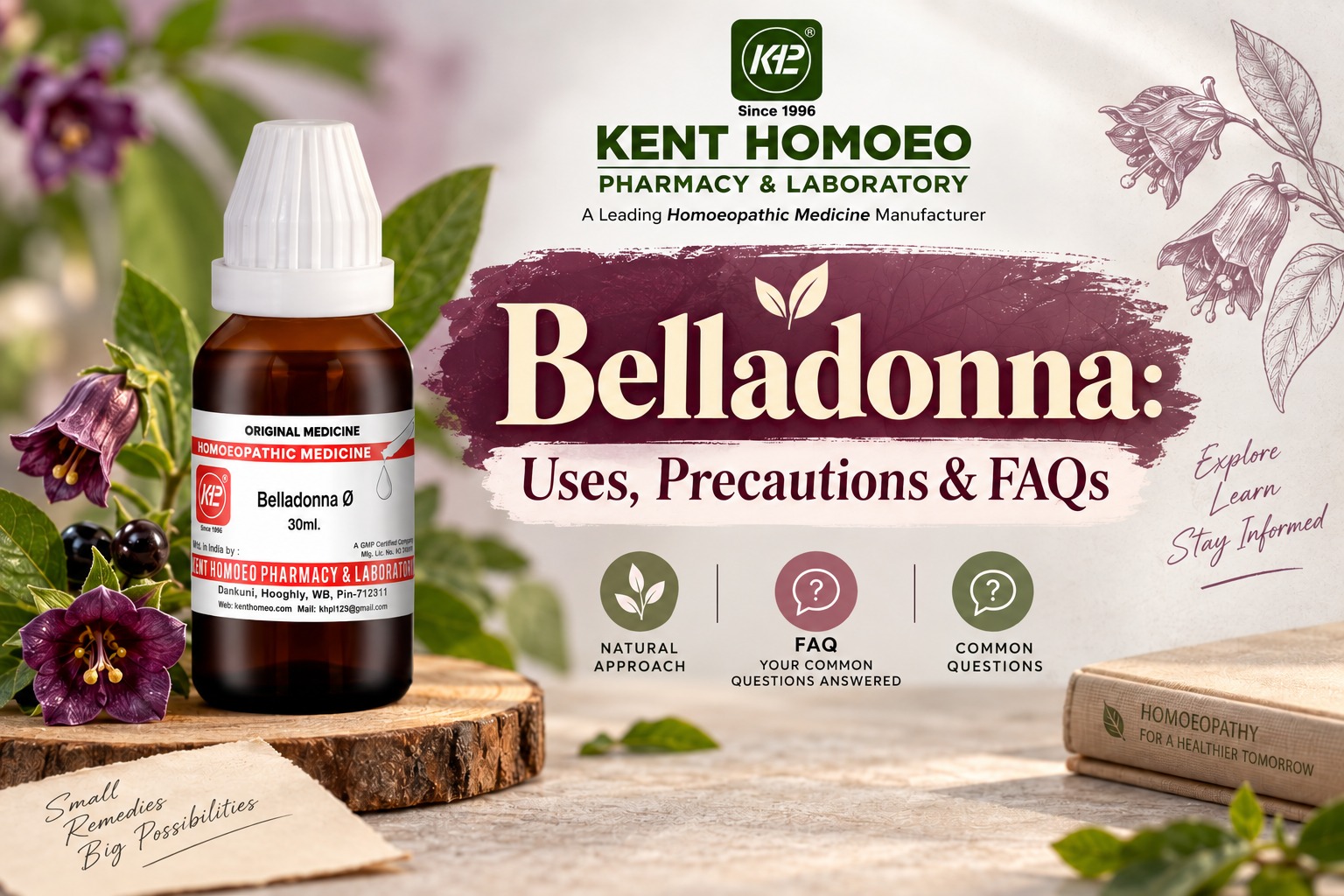
Belladonna: Uses, Precautions & FAQs
A sudden feeling of heat, a flushed appearance, or unusual sensitivity to light can make anyone wonder what might be happening. In Homoeopathic materia medica, such individual patterns are studied in detail—and Belladonna is one remedy with a particularly distinctive profile.
What Is Belladonna?
Belladonna, commonly known as Deadly Nightshade, is a plant associated with the Solanaceae family. In Homoeopathy, Belladonna is recognised as a remedy with a well-defined symptom picture.
Its traditional profile is considered as a whole rather than being linked to one symptom alone.
Belladonna: Commonly Discussed Uses
In traditional Homoeopathic literature, Belladonna is described in connection with patterns involving:
Head and face: sensations of heat, flushing, or a feeling of fullness.
Eyes: sensitivity to light and changes in the appearance of the eyes.
Throat: sensations of dryness or discomfort.
General sensations: sudden or noticeable changes that may feel intense.
These descriptions are part of the traditional materia medica profile and should not be interpreted as a diagnosis or guaranteed indication for use.
Why Individual Symptoms Matter
Two people may both say they have a headache, but their experiences can be completely different. One may notice sensitivity to light, while another may describe an entirely different pattern.
In Homoeopathic practice, these finer details are traditionally considered when evaluating whether a remedy profile corresponds with an individual's overall presentation.
Precautions to Keep in Mind
Belladonna deserves particular care because the raw plant and concentrated preparations can be toxic. It should not be used as a homemade preparation or self-prescribed from the plant.
Only appropriately prepared medicinal products should be considered, and guidance from a qualified professional is advisable.
Frequently Asked Questions
1. Is Belladonna a plant?
Yes. Belladonna is the common name for Atropa belladonna, also known as Deadly Nightshade.
2. Is Belladonna used in Homoeopathy?
Yes. It is a well-established remedy described in Homoeopathic materia medica.
3. Can everyone use Belladonna?
Not necessarily. Suitability depends on the individual and the preparation. Professional guidance is recommended.
4. Is the Belladonna plant safe to consume?
No. The raw plant contains toxic compounds and should never be consumed casually.
A Quick Takeaway
Belladonna is an interesting example of how Homoeopathy traditionally studies the complete pattern of an individual's symptoms rather than a condition name alone.
Disclaimer: This article is for educational purposes only and does not provide medical advice or establish the effectiveness of any medicinal preparation. Always consult a qualified Homoeopathic practitioner or healthcare professional before using any remedy.