
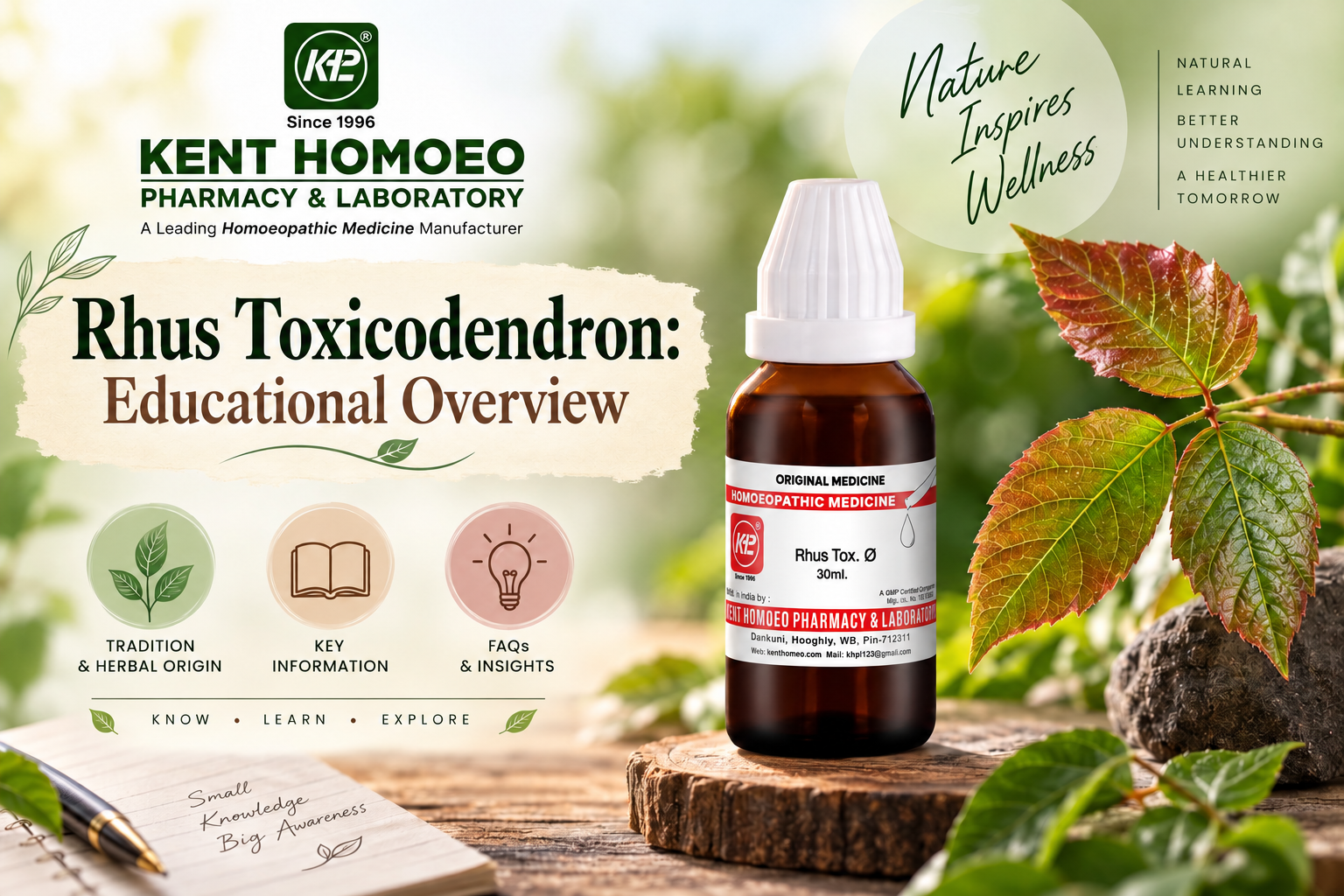
Rhus Toxicodendron: Educational Overview
Rest or movement—which one feels different?
This simple question can sometimes describe a person's experience more clearly than a long list of symptoms. In Homoeopathic literature, such individual details are given attention when studying remedy profiles. Rhus Toxicodendron is one remedy that has a particularly interesting profile in this regard.
From Plant to Homoeopathic Remedy
Rhus Toxicodendron is associated with a plant from the poison ivy group and is a recognised remedy in Homoeopathic materia medica.
Rather than being defined by one particular complaint, its profile is built around a combination of observations—how a sensation is experienced, what seems to influence it, and which other symptoms appear alongside it.
What Does Its Profile Include?
Rhus Toxicodendron is traditionally described in relation to muscles, joints and stiffness, with particular attention given to how symptoms may differ between rest and movement.
Its materia medica profile also contains descriptions concerning the skin and general physical state. These observations form part of the broader picture considered in traditional Homoeopathic practice.
The Detail That Makes It Interesting
Consider someone who notices that their body feels different after remaining still for some time, compared with when they gradually start moving. Another person may experience a completely different pattern despite describing a similar concern.
This is why Homoeopathic practitioners traditionally look beyond the name of a complaint and consider the individual symptom pattern when studying remedies such as Rhus Toxicodendron.
Looking at the Bigger Picture
Rhus Toxicodendron is therefore interesting not simply because of the symptoms associated with it, but because it demonstrates how Homoeopathic materia medica records small differences in individual experiences.
Understanding these remedy profiles can provide a useful introduction to the traditional principles and language of Homoeopathic practice.
Disclaimer: This article is for educational purposes only and does not provide medical advice or establish the effectiveness of any medicinal preparation. Consult a qualified Homoeopathic practitioner or healthcare professional before using any remedy.