
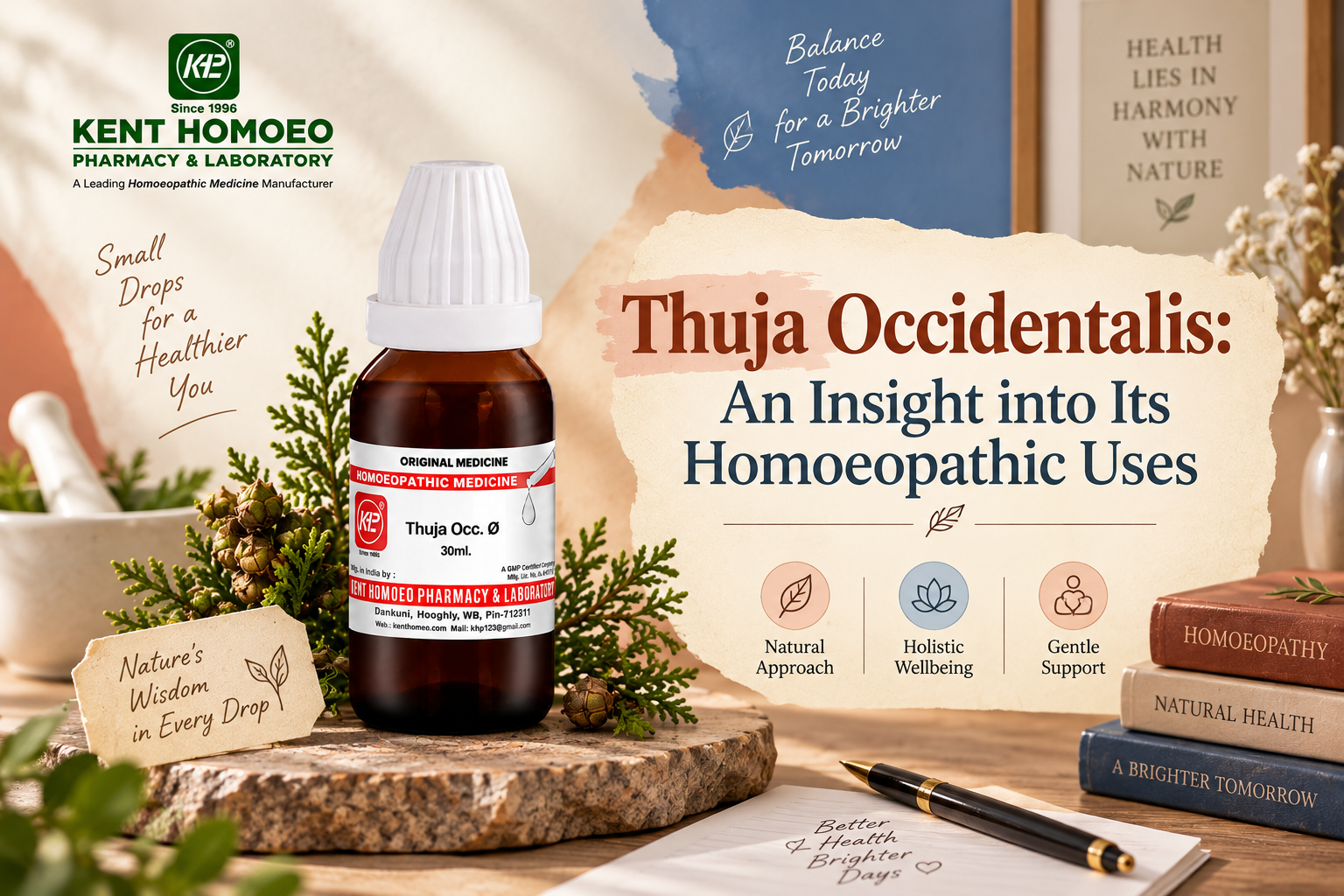
Thuja Occidentalis: An Insight into Its Homoeopathic Uses
Have you ever wondered why people with similar health concerns can experience them in very different ways? This individual approach is an important part of Homoeopathy—and it is also where Thuja Occidentalis comes into the picture.
What Is Thuja Occidentalis?
Thuja Occidentalis, commonly known as Arborvitae, is an evergreen tree native to North America. It has a long history of use in herbal traditions and is also recognised as a remedy in Homoeopathic materia medica.
Thuja Occidentalis in Homoeopathy
Homoeopathic literature describes Thuja through a distinctive pattern of symptoms. Its traditional profile includes observations relating to areas such as the skin, urinary system, and general well-being.
Rather than focusing on a condition alone, Homoeopathic practitioners may consider the person's complete symptom picture, including how symptoms feel, when they appear, and what other experiences accompany them.
Whar are the interesting facts about Thuja?
Thuja has a distinctive profile in Homoeopathic literature, making it an interesting remedy for those exploring how individual symptom patterns are considered in Homoeopathic practice.
For readers interested in natural and complementary approaches, learning about Thuja can offer a glimpse into the broader principles behind Homoeopathic materia medica.
Disclaimer: This article is for educational purposes only and does not provide medical advice or establish the effectiveness of any medicinal preparation. Consult a qualified Homoeopathic practitioner or healthcare professional before using any remedy.